Showa Tenno Hirohito, the 124th Japanese monarch in an imperial line dating back to 660 B.C., dies after serving six decades as the emperor of Japan. He was the longest serving monarch in Japanese history.
Made regent in 1921, Hirohito was enthroned as emperor in 1928, two years after the death of his father, Emperor Taisho. During his first two decades as emperor, Hirohito presided over one of the most turbulent eras in his nation’s history. From rapid military expansion beginning in 1931 to the crushing defeat of Japan in 1945, Hirohito stood above the Japanese people as an absolute monarch whose powers were sharply limited in practice. After U.S. atomic bombs destroyed Hiroshima and Nagasaki, it was he who argued for his country’s surrender, explaining to the Japanese people in his first-ever radio address that the “unendurable must be endured.” Under U.S. occupation and postwar reconstruction, Hirohito was formally stripped of his powers and forced to renounce his alleged divinity, but he remained his country’s official figurehead until his death in 1989. He was succeeded as emperor by his only son, Akihito.
Monday, January 7, 2019

Sunday, January 6, 2019
First U.S. presidential election
On this day in 1789, America’s first presidential election is held. Voters cast ballots to choose state electors; only white men who owned property were allowed to vote. As expected, George Washington won the election and was sworn into office on April 30, 1789.
As it did in 1789, the United States still uses the Electoral College system, established by the U.S. Constitution, which today gives all American citizens over the age of 18 the right to vote for electors, who in turn vote for the president. The president and vice president are the only elected federal officials chosen by the Electoral College instead of by direct popular vote.
Today political parties usually nominate their slate of electors at their state conventions or by a vote of the party’s central state committee, with party loyalists often being picked for the job. Members of the U.S. Congress, though, can’t be electors. Each state is allowed to choose as many electors as it has senators and representatives in Congress. The District of Columbia has 3 electors. During a presidential election year, on Election Day (the first Tuesday after the first Monday in November), the electors from the party that gets the most popular votes are elected in a winner-take-all-system, with the exception of Maine and Nebraska, which allocate electors proportionally. In order to win the presidency, a candidate needs a majority of 270 electoral votes out of a possible 538.
On the first Monday after the second Wednesday in December of a presidential election year, each state’s electors meet, usually in their state capitol, and simultaneously cast their ballots nationwide. This is largely ceremonial: Because electors nearly always vote with their party, presidential elections are essentially decided on Election Day. Although electors aren’t constitutionally mandated to vote for the winner of the popular vote in their state, it is demanded by tradition and required by law in 26 states and the District of Columbia (in some states, violating this rule is punishable by $1,000 fine). Historically, over 99 percent of all electors have cast their ballots in line with the voters. On January 6, as a formality, the electoral votes are counted before Congress and on January 20, the commander in chief is sworn into office.
Critics of the Electoral College argue that the winner-take-all system makes it possible for a candidate to be elected president even if he gets fewer popular votes than his opponent. This happened in the elections of 1876, 1888 and 2000. However, supporters contend that if the Electoral College were done away with, heavily populated states such as California and Texas might decide every election and issues important to voters in smaller states would be ignored.
Friday, January 4, 2019
The euro debuts 1999
On this day in 1999, for the first time since Charlemagne’s reign in the ninth century, Europe is united
with a common currency when the “euro” debuts as a financial unit in corporate and investment markets.
Eleven European Union (EU) nations (Austria, Belgium, Finland, France, Germany, Ireland, Italy,
Luxembourg, the Netherlands, Portugal and Spain), representing some 290 million people, launched the
currency in the hopes of increasing European integration and economic growth. Closing at a robust 1.17
U.S. dollars on its first day, the euro promised to give the dollar a run for its money in the new
global economy. Euro cash, decorated with architectural images, symbols of European unity and member-
state motifs, went into circulation on January 1, 2002, replacing the Austrian schilling, Belgian franc,
Finnish markka, French franc, German mark, Italian lira, Irish punt, Luxembourg franc, Netherlands
guilder, Portugal escudo and Spanish peseta. A number of territories and non-EU nations including Monaco
and Vatican City also adopted the euro.
Conversion to the euro wasn’t without controversy. Despite the practical benefits of a common currency
that would make it easier to do business and travel throughout Europe, there were concerns that the
changeover process would be costly and chaotic, encourage counterfeiting, lead to inflation and cause
individual nations to loose control over their economic policies. Great Britain, Sweden and Demark opted
not to use the euro. Greece, after initially being excluded for failing to meet all the required
conditions, adopted the euro in January 2001, becoming the 12th member of the so-called eurozone.
The euro was established by the 1992 Maastricht Treaty on European Union, which spelled out specific
economic requirements, including high degree of price stability and low inflation, which countries must
meet before they can begin using the new money. The euro consists of 8 coins and 7 paper bills. The
Frankfurt-based European Central Bank (ECB) manages the euro and sets interest rates and other monetary
policies. In 2004, 10 more countries joined the EU—-Cyprus, Czech Republic, Estonia, Hungary, Latvia,
Lithuania, Malta, Poland, Slovakia and Slovenia. Several of these countries plan to start using the euro
in 2007, with the rest to follow in coming years.
Thursday, January 3, 2019
Martin Luther excommunicated-On January 3, 1521
On January 3, 1521, Pope Leo X issues the papal bull Decet Romanum Pontificem, which excommunicates Martin Luther from the Catholic Church.
Martin Luther, the chief catalyst of Protestantism, was a professor of biblical interpretation at the University of Wittenberg in Germany when he drew up his 95 theses condemning the Catholic Church for its corrupt practice of selling indulgences, or the forgiveness of sins. He followed up the revolutionary work with equally controversial and groundbreaking theological works, and his fiery words set off religious reformers all across Europe.
In January 1521, Pope Leo X excommunicated Luther. Three months later, Luther was called to defend his beliefs before Holy Roman Emperor Charles V at the Diet of Worms, where he was famously defiant. For his refusal to recant his writings, the emperor declared him an outlaw and a heretic. Luther was protected by powerful German princes, however, and by his death in 1546, the course of Western civilization had been significantly altered.
Martin Luther, the chief catalyst of Protestantism, was a professor of biblical interpretation at the University of Wittenberg in Germany when he drew up his 95 theses condemning the Catholic Church for its corrupt practice of selling indulgences, or the forgiveness of sins. He followed up the revolutionary work with equally controversial and groundbreaking theological works, and his fiery words set off religious reformers all across Europe.
In January 1521, Pope Leo X excommunicated Luther. Three months later, Luther was called to defend his beliefs before Holy Roman Emperor Charles V at the Diet of Worms, where he was famously defiant. For his refusal to recant his writings, the emperor declared him an outlaw and a heretic. Luther was protected by powerful German princes, however, and by his death in 1546, the course of Western civilization had been significantly altered.
Russian fleet surrenders at Port Arthur 1905
Russian fleet surrenders at Port Arthur
During the Russo-Japanese War, Port Arthur, the Russian naval base in China, falls to Japanese naval forces under Admiral Heihachiro Togo. It was the first in a series of defeats that by June turned the tide of the imperial conflict irrevocably against Russia.
In February 1904, following a Russian rejection of a Japanese plan to divide Manchuria and Korea into spheres of influence, Japan launched a surprise naval attack on Port Arthur, decimating the Russian fleet. In the subsequent fighting, Japan won a series of decisive victories over the Russians, who underestimated the military potential of its non-Western opponent.
In January 1905, the strategic naval base of Port Arthur fell to the Japanese; in March, Russian troops were defeated at Shenyang, China, by Japanese Field Marshal Iwao Oyama; and in May, the Russian Baltic fleet under Admiral Zinovi Rozhdestvenski was destroyed by Admiral Togo’s fleet near the Tsushima Islands. These three crucial defeats convinced Russia that further resistance against Japan’s imperial designs on East Asia was hopeless, and in August 1905 President Theodore Roosevelt mediated a peace treaty at Portsmouth, New Hampshire.
Japan emerged from the conflict as the first modern non-Western world power and set its sights on greater imperial expansion. For Russia, however, the disastrous performance in the war was one of the immediate causes of the Russian Revolution of 1905.
During the Russo-Japanese War, Port Arthur, the Russian naval base in China, falls to Japanese naval forces under Admiral Heihachiro Togo. It was the first in a series of defeats that by June turned the tide of the imperial conflict irrevocably against Russia.
In February 1904, following a Russian rejection of a Japanese plan to divide Manchuria and Korea into spheres of influence, Japan launched a surprise naval attack on Port Arthur, decimating the Russian fleet. In the subsequent fighting, Japan won a series of decisive victories over the Russians, who underestimated the military potential of its non-Western opponent.
In January 1905, the strategic naval base of Port Arthur fell to the Japanese; in March, Russian troops were defeated at Shenyang, China, by Japanese Field Marshal Iwao Oyama; and in May, the Russian Baltic fleet under Admiral Zinovi Rozhdestvenski was destroyed by Admiral Togo’s fleet near the Tsushima Islands. These three crucial defeats convinced Russia that further resistance against Japan’s imperial designs on East Asia was hopeless, and in August 1905 President Theodore Roosevelt mediated a peace treaty at Portsmouth, New Hampshire.
Japan emerged from the conflict as the first modern non-Western world power and set its sights on greater imperial expansion. For Russia, however, the disastrous performance in the war was one of the immediate causes of the Russian Revolution of 1905.
Wednesday, January 2, 2019
8 spooky signs that your home might be haunted
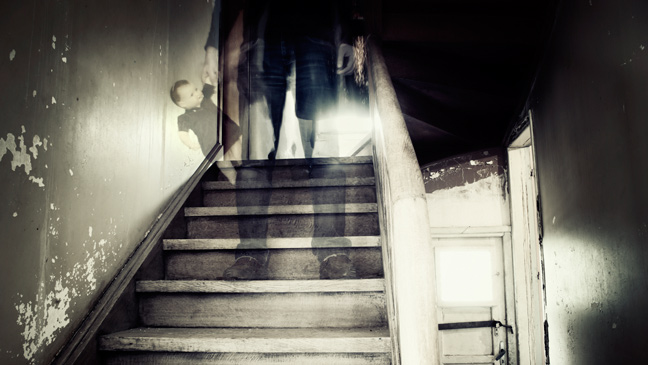
Not everyone believes in ghosts, spirits and the paranormal. But are there strange goings-on in your home that you sometimes can’t explain? One possible conclusion could be that it’s haunted…
Alison Wynne-Ryder, a psychic medium, believes there’s a few easy ways to tell if your house is home to spirits. And before you think that it’s only old buildings that can be haunted, think again.
We take a look at how you can tell if your home is haunted...who you gonna call?
What type of buildings can be haunted?
“Although most people you ask would say old properties – or buildings that house many people, such as prisons, hospitals and castles – the reality is that any property can be haunted, even a modern one,” says Alison.
“However, the likelihood is that more old properties tend to have a ‘haunted feeling’ about them, as they have more history and habitation than newer buildings.”
What feelings would I have in a ‘haunted’ property?
- Feelings of being watched or spied on.
- Feelings of someone standing close behind you.
- Feelings of being touched by unseen hands.
- Feelings of the hair on back of your neck standing up.
- Feelings of cobwebs on your face or body.
- Feeling a cold breeze as if someone has walked past you.
- Dark depressing feeling, especially in one particular location.
What are the signs that a building is haunted?
- Lights turning on and off, or up and down, on their own.
- Light bulbs blowing frequently.
- Sounds of items being dropped – but when you go to investigate, there is nothing there.
- Seeing unexplained shadows from the corner of your eye.
- Strange behaviour from pets in the property: e.g. dogs barking or growling at something you cannot see, cats staring in a particular area as if they can see someone.
- Hearing voices of people, whispers, or someone calling your name.
- Seeing twinkling lights, mists or unexplained moving shapes.
- Sudden temperature drops, especially in one area of the property.
How do spirits enter a house?
“They can 'reside' anywhere, but there are some traditional beliefs that the spirit enters and leaves through the chimney,” says Alison. “I know through experience that if they want to enter a house, they will enter wherever they wish to – and don't always exit the same way.
“They don't necessarily confine themselves to one area, although if they feel comfortable in a particular area, this will be where most of the activity is felt – such as extremely cold spots, feelings of being touched and so on.
“For example, there was a spirit boy in my own house a couple of years ago and the sounds he was making seemed to come from within the walls. However, the deep cold I felt was in the spare bedroom, where my grandchildren stayed when they visited. He was drawn to them, making their toys go off on their own, playing with them. During this time, he hid in the wardrobe until I drew him close, communicated with him, and with the help of my medium friend, sent him to the light.”
What should I do if I think my home is haunted?
Alison suggests keeping a diary of events to see if there’s a pattern occurring of unexplained activity.
She also advises to think about when the strange goings-on started, and if something had happened around that time that could be attributed to the activity.
“For example, did someone 'play' with a oujia board, did you stay in a haunted house or castle, or visit an old graveyard?”
“If your home is indeed haunted, this will not go away of its own accord - it will get worse,” says Alison. She advises calling a reputable medium with ‘spirit rescue experience’ to see what they feel or sense, and give you advice.
“If there is a spirit stuck in the home, they will attend with another medium (or two, in case one of them is overshadowed by the spirit) and communicate with the spirit, hopefully sending it to the light.”
Monday, December 24, 2018
The Christmas Truce
The Christmas Truce
Just after midnight on Christmas morning, the majority of German troops engaged in World War I cease firing their guns and artillery and commence to sing Christmas carols. At certain points along the eastern and western fronts, the soldiers of Russia, France, and Britain even heard brass bands joining the Germans in their joyous singing.
At the first light of dawn, many of the German soldiers emerged from their trenches and approached the Allied lines across no-man’s-land, calling out “Merry Christmas” in their enemies’ native tongues. At first, the Allied soldiers feared it was a trick, but seeing the Germans unarmed they climbed out of their trenches and shook hands with the enemy soldiers. The men exchanged presents of cigarettes and plum puddings and sang carols and songs. There was even a documented case of soldiers from opposing sides playing a good-natured game of soccer.
The so-called Christmas Truce of 1914 came only five months after the outbreak of war in Europe and was one of the last examples of the outdated notion of chivalry between enemies in warfare. In 1915, the bloody conflict of World War I erupted in all its technological fury, and the concept of another Christmas Truce became unthinkable
Subscribe to:
Posts (Atom)