On January 3, 1521, Pope Leo X issues the papal bull Decet Romanum Pontificem, which excommunicates Martin Luther from the Catholic Church.
Martin Luther, the chief catalyst of Protestantism, was a professor of biblical interpretation at the University of Wittenberg in Germany when he drew up his 95 theses condemning the Catholic Church for its corrupt practice of selling indulgences, or the forgiveness of sins. He followed up the revolutionary work with equally controversial and groundbreaking theological works, and his fiery words set off religious reformers all across Europe.
In January 1521, Pope Leo X excommunicated Luther. Three months later, Luther was called to defend his beliefs before Holy Roman Emperor Charles V at the Diet of Worms, where he was famously defiant. For his refusal to recant his writings, the emperor declared him an outlaw and a heretic. Luther was protected by powerful German princes, however, and by his death in 1546, the course of Western civilization had been significantly altered.
Russian fleet surrenders at Port Arthur During the Russo-Japanese War, Port Arthur, the Russian naval base in China, falls to Japanese naval forces under Admiral Heihachiro Togo. It was the first in a series of defeats that by June turned the tide of the imperial conflict irrevocably against Russia.
In February 1904, following a Russian rejection of a Japanese plan to divide Manchuria and Korea into spheres of influence, Japan launched a surprise naval attack on Port Arthur, decimating the Russian fleet. In the subsequent fighting, Japan won a series of decisive victories over the Russians, who underestimated the military potential of its non-Western opponent.
In January 1905, the strategic naval base of Port Arthur fell to the Japanese; in March, Russian troops were defeated at Shenyang, China, by Japanese Field Marshal Iwao Oyama; and in May, the Russian Baltic fleet under Admiral Zinovi Rozhdestvenski was destroyed by Admiral Togo’s fleet near the Tsushima Islands. These three crucial defeats convinced Russia that further resistance against Japan’s imperial designs on East Asia was hopeless, and in August 1905 President Theodore Roosevelt mediated a peace treaty at Portsmouth, New Hampshire.
Japan emerged from the conflict as the first modern non-Western world power and set its sights on greater imperial expansion. For Russia, however, the disastrous performance in the war was one of the immediate causes of the Russian Revolution of 1905.
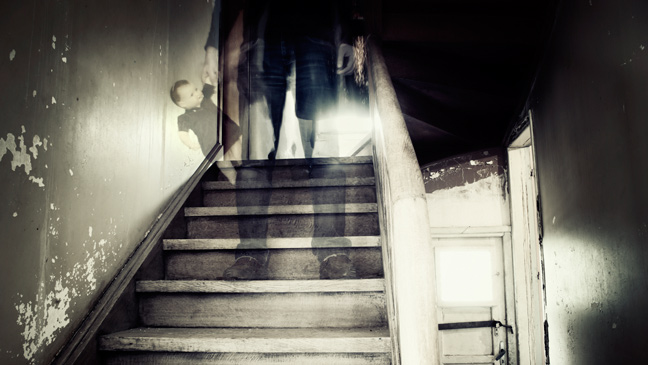
Find yourself wondering whether you live in a haunted house? Here are the common signs – and what to do about them.
Not everyone believes in ghosts, spirits and the paranormal. But are there strange goings-on in your home that you sometimes can’t explain? One possible conclusion could be that it’s haunted…
Alison Wynne-Ryder, a psychic medium, believes there’s a few easy ways to tell if your house is home to spirits. And before you think that it’s only old buildings that can be haunted, think again.
We take a look at how you can tell if your home is haunted...who you gonna call?
What type of buildings can be haunted?
“Although most people you ask would say old properties – or buildings that house many people, such as prisons, hospitals and castles – the reality is that any property can be haunted, even a modern one,” says Alison.
“However, the likelihood is that more old properties tend to have a ‘haunted feeling’ about them, as they have more history and habitation than newer buildings.”
What feelings would I have in a ‘haunted’ property?
Feelings of being watched or spied on.
Feelings of someone standing close behind you.
Feelings of being touched by unseen hands.
Feelings of the hair on back of your neck standing up.
Feelings of cobwebs on your face or body.
Feeling a cold breeze as if someone has walked past you.
Dark depressing feeling, especially in one particular location.
Lights turning on and off, or up and down, on their own.
Light bulbs blowing frequently.
Sounds of items being dropped – but when you go to investigate, there is nothing there.
Seeing unexplained shadows from the corner of your eye.
Strange behaviour from pets in the property: e.g. dogs barking or growling at something you cannot see, cats staring in a particular area as if they can see someone.
Hearing voices of people, whispers, or someone calling your name.
Seeing twinkling lights, mists or unexplained moving shapes.
Sudden temperature drops, especially in one area of the property.
How do spirits enter a house?
“They can 'reside' anywhere, but there are some traditional beliefs that the spirit enters and leaves through the chimney,” says Alison. “I know through experience that if they want to enter a house, they will enter wherever they wish to – and don't always exit the same way.
“They don't necessarily confine themselves to one area, although if they feel comfortable in a particular area, this will be where most of the activity is felt – such as extremely cold spots, feelings of being touched and so on.
“For example, there was a spirit boy in my own house a couple of years ago and the sounds he was making seemed to come from within the walls. However, the deep cold I felt was in the spare bedroom, where my grandchildren stayed when they visited. He was drawn to them, making their toys go off on their own, playing with them. During this time, he hid in the wardrobe until I drew him close, communicated with him, and with the help of my medium friend, sent him to the light.”
What should I do if I think my home is haunted?
Alison suggests keeping a diary of events to see if there’s a pattern occurring of unexplained activity.
She also advises to think about when the strange goings-on started, and if something had happened around that time that could be attributed to the activity.
“For example, did someone 'play' with a oujia board, did you stay in a haunted house or castle, or visit an old graveyard?”
“If your home is indeed haunted, this will not go away of its own accord - it will get worse,” says Alison. She advises calling a reputable medium with ‘spirit rescue experience’ to see what they feel or sense, and give you advice.
“If there is a spirit stuck in the home, they will attend with another medium (or two, in case one of them is overshadowed by the spirit) and communicate with the spirit, hopefully sending it to the light.”
The Christmas Truce Just after midnight on Christmas morning, the majority of German troops engaged in World War I cease firing their guns and artillery and commence to sing Christmas carols. At certain points along the eastern and western fronts, the soldiers of Russia, France, and Britain even heard brass bands joining the Germans in their joyous singing.
At the first light of dawn, many of the German soldiers emerged from their trenches and approached the Allied lines across no-man’s-land, calling out “Merry Christmas” in their enemies’ native tongues. At first, the Allied soldiers feared it was a trick, but seeing the Germans unarmed they climbed out of their trenches and shook hands with the enemy soldiers. The men exchanged presents of cigarettes and plum puddings and sang carols and songs. There was even a documented case of soldiers from opposing sides playing a good-natured game of soccer.
The so-called Christmas Truce of 1914 came only five months after the outbreak of war in Europe and was one of the last examples of the outdated notion of chivalry between enemies in warfare. In 1915, the bloody conflict of World War I erupted in all its technological fury, and the concept of another Christmas Truce became unthinkable
The exact time when the moon comes opposite the sun is 17.48, though witnesses will be able to see the full moon at any point overnight.
“It will be visible throughout the night, for anyone who has clear skies – the actual moment of the full moon, the point where the moon comes exactly opposite the sun in the sky will be at 17.48, so just coming up to six o’clock, but there will be no appreciable difference in how the moon appears,”
“As it stands, it’s looking rather cloudy, not completely overcast here in the South so there might be quite a lot of cloud, but if the cloud is thin cloud, then the moon is very dramatic anyway, being so bright in the sky thin cloud normally isn’t enough to stop the moon light coming through – and if you have a telescope or something like that you can usually see the details on the surface of the moon, even through a small amount of thin cloud.”
The astronomer warned that the moon may appear bigger but said this is just an illusion.
You will notice as well that when the moon is rising and setting when it’s a full moon in particular it has a tendency to look very large and this is an illusion created by our brains when things are close to the horizon.
“But also something that is not an illusion is that the rising and setting can take on quite a warm colour, sort of a yellow, orange tone and this is because moon light, which is sunlight bouncing off the moon, is being filtered through our atmosphere, so in the same way that sunsets look red, moon sets and moon rises also have a slightly reddish colour to them.”
Though there aren’t any noticeable differences in a full moon, the event does take place during the Ursids meteor shower, which could provide some extra special lunar photography.
The event is particularly notable this year as it occurs around the 50th anniversary of Apollo 8, the first time humans could see the whole of the planet at once.
Under the care of Robert Cushman, the first American furs to be exported from the continent leave for England aboard the Fortune.
One month before, Cushman and the Fortune had arrived at Plymouth Colony in present-day Massachusetts with 35 settlers, the first new colonists since the settlement was founded in 1620. During Cushman’s return to England, the Fortune was captured by the French, and its valuable cargo of furs was taken. Cushman was detained on the Ile d’Dieu before being returned to England.
Within a few years of their first fur export, the Plymouth colonists, unable to make their living through cod fishing as they had originally planned, began concentrating almost entirely on the fur trade. The colonists developed an economic system in which their chief crop, Indian corn, was traded with Native Americans to the north for highly valued beaver skins, which were in turn profitably sold in England to pay the Plymouth Colony’s debts and buy necessary supplies.
English seaman Francis Drake sets out from Plymouth, England, with five ships and 164 men on a mission to raid Spanish holdings on the Pacific coast of the New World and explore the Pacific Ocean. Three years later, Drake’s return to Plymouth marked the first circumnavigation of the earth by a British explorer.
After crossing the Atlantic, Drake abandoned two of his ships in South America and then sailed into the Straits of Magellan with the remaining three. A series of devastating storms besieged his expedition in the treacherous straits, wrecking one ship and forcing another to return to England. Only The Golden Hind reached the Pacific Ocean, but Drake continued undaunted up the western coast of South America, raiding Spanish settlements and capturing a rich Spanish treasure ship.
Drake then continued up the western coast of North America, searching for a possible northeast passage back to the Atlantic. Reaching as far north as present-day Washington before turning back, Drake paused near San Francisco Bay in June 1579 to repair his ship and prepare for a journey across the Pacific. Calling the land “Nova Albion,” Drake claimed the territory for Queen Elizabeth I.
In July, the expedition set off across the Pacific, visiting several islands before rounding Africa’s Cape of Good Hope and returning to the Atlantic Ocean. On September 26, 1580, The Golden Hind returned to Plymouth, England, bearing treasure, spice, and valuable information about the world’s great oceans. Drake was the first captain to sail his own ship all the way around the world–the Portuguese explorer Ferdinand Magellan had sailed three-fourths of the way around the globe earlier in the century but had been killed in the Philippines, leaving the Basque navigator Juan Sebastián de Elcano to complete the journey.
In 1581, Queen Elizabeth I knighted Drake, the son of a tenant farmer, during a visit to his ship. The most renowned of the Elizabethan seamen, Sir Francis Drake later played a crucial role in the defeat of the Spanish Armada.