Saturday, April 25, 2020

Easter Rebellion begins April 24 1916

On April 24, 1916, on Easter Monday in Dublin, the Irish Republican Brotherhood, a secret organization of Irish nationalists led by Patrick Pearse, launches the so-called Easter Rebellion, an armed uprising against British rule. Assisted by militant Irish socialists under James Connolly, Pearse and his fellow Republicans rioted and attacked British provincial government headquarters across Dublin and seized the Irish capital's General Post Office. 

Following these successes, they proclaimed the independence of Ireland, which had been under the repressive thumb of the United Kingdom for centuries, and by the next morning were in control of much of the city. Later that day, however, British authorities launched a counteroffensive, and by April 29 the uprising had been crushed. Nevertheless, the Easter Rebellion is considered a significant marker on the road to establishing an independent Irish republic.

Following the uprising, Pearse and 14 other nationalist leaders were executed for their participation and held up as martyrs by many in Ireland. There was little love lost among most Irish people for the British, who had enacted a series of harsh anti-Catholic restrictions, the Penal Laws, in the 18th century, and then let 1.5 million Irish starve during the Potato Famine of 1845-1852. Armed protest continued after the Easter Rebellion and in 1921, 26 of Ireland's 32 counties won independence with the declaration of the Irish Free State. The Free State became an independent republic in 1949. However, six northeastern counties of the Emerald Isle remained part of the United Kingdom, prompting some nationalists to reorganize themselves into the Irish Republican Army (IRA) to continue their struggle for full Irish independence.

In the late 1960s, influenced in part by the U.S. civil rights movement, Catholics in Northern Ireland, long discriminated against by British policies that favored Irish Protestants, advocated for justice. Civil unrest broke out between Catholics and Protestants in the region and the violence escalated as the pro-Catholic IRA battled British troops. An ongoing series of terrorist bombings and attacks ensued in a drawn-out conflict that came to be known as "The Troubles." Peace talks eventually took place throughout the mid- to late 1990s, but a permanent end to the violence remained elusive. Finally, in July 2005, the IRA announced its members would give up all their weapons and pursue the group's objectives solely through peaceful means. By the fall of 2006, the Independent Monitoring Commission reported that the IRA's military campaign to end British rule was over.

 

Friday, April 24, 2020

THE IDEA FOR THE FIRST EARTH DAY

THE IDEA FOR THE FIRST EARTH DAY Senator Gaylord Nelson, a junior senator from Wisconsin, had long been concerned about the deteriorating environment in the United States. Then in January 1969, he and many others witnessed the ravages of a massive oil spill in Santa Barbara, California. Inspired by the student anti-war movement, Senator Nelson wanted to infuse the energy of student anti-war protests with an emerging public consciousness about air and water pollution. Senator Nelson announced the idea for a teach-in on college campuses to the national media, and persuaded Pete McCloskey, a conservation-minded Republican Congressman, to serve as his co-chair.

They recruited Denis Hayes, a young activist, to organize the campus teach-ins and they choose April 22, a weekday falling between Spring Break and Final Exams, to maximize the greatest student participation. Recognizing its potential to inspire all Americans, Hayes built a national staff of 85 to promote events across the land and the effort soon broadened to include a wide range of organizations, faith groups, and others. They changed the name to Earth Day, which immediately sparked national media attention, and caught on across the country. Earth Day inspired 20 million Americans — at the time, 10% of the total population of the United States — to take to the streets, parks and auditoriums to demonstrate against the impacts of 150 years of industrial development which had left a growing legacy of serious human health impacts.

Thousands of colleges and universities organized protests against the deterioration of the environment and there were massive coast-to-coast rallies in cities, towns, and communities. Groups that had been fighting individually against oil spills, polluting factories and power plants, raw sewage, toxic dumps, pesticides, freeways, the loss of wilderness and the extinction of wildlife united on Earth Day around these shared common values. Earth Day 1970 achieved a rare political alignment, enlisting support from Republicans and Democrats, rich and poor, urban dwellers and farmers, business and labor leaders.

By the end of 1970, the first Earth Day led to the creation of the United States Environmental Protection Agency and the passage of other first of their kind environmental laws, including the National Environmental Education Act, the Occupational Safety and Health Act, and the Clean Air Act. Two years later Congress passed the Clean Water Act. A year after that, Congress passed the Endangered Species Act and soon after the Federal Insecticide, Fungicide, and Rodenticide Act. These laws have protected millions of men, women and children from disease and death and have protected hundreds of species from extinction.

Thursday, April 23, 2020

May 24 1543 Astronomer Nicolaus Copernicus dies

On May 24, 1543, Polish astronomer Nicolaus Copernicus dies in what is now Frombork, Poland. The father of modern astronomy, he was the first modern European scientist to propose that Earth and other planets revolve around the sun. Prior to the publication of his major astronomical work, "Six Books Concerning the Revolutions of the Heavenly Orbs," in 1543, European astronomers argued that Earth lay at the center of the universe, the view also held by most ancient philosophers and biblical writers.

In addition to correctly postulating the order of the known planets, including Earth, from the sun, and estimating their orbital periods relatively accurately, Copernicus argued that Earth turned daily on its axis and that gradual shifts of this axis accounted for the changing seasons. He died the year his major work was published, saving him from the outrage of some religious leaders who later condemned his heliocentric view of the universe as heresy. By the late 18th century, the Copernican view of the solar system was almost universally accepted.

Monday, April 20, 2020

Jackie Robinson breaks color barrier April 15 1947 This Day in History

On April 15, 1947, Jackie Robinson, age 28, becomes the first African American player in Major League Baseball when he steps onto Ebbets Field in Brooklyn to compete for the Brooklyn Dodgers. Robinson broke the color barrier in a sport that had been segregated for more than 50 years. Exactly 50 years later, on April 15, 1997, Robinson's groundbreaking career was honored and his uniform number, 42, was retired from Major League Baseball by Commissioner Bud Selig in a ceremony attended by over 50,000 fans at New York City's Shea Stadium. Robinson's was the first-ever number retired by all teams in the league.

Jack Roosevelt Robinson was born January 31, 1919, in Cairo, Georgia, to a family of sharecroppers. Growing up, he excelled at sports and attended the University of California at Los Angeles, where he was the first athlete to letter in four varsity sports: baseball, basketball, football and track. After financial difficulties forced Robinson to drop out of UCLA, he joined the army in 1942 and was commissioned as a second lieutenant. After protesting instances of racial discrimination during his military service, Robinson was court-martialed in 1944. Ultimately, though, he was honorably discharged.

After the army, Robinson played for a season in the Negro American League. In 1946, he spent one season with the Canadian minor league team the Montreal Royals. In 1947, Robinson was called up to the Majors and soon became a star infielder and outfielder for the Dodgers, as well as the National League's Rookie of the Year. In 1949, the right-hander was named the National League's Most Valuable Player and league batting champ. Robinson played on the National League All-Star team from 1949 through 1954 and led the Dodgers to six National League pennants and one World Series, in 1955. He was inducted into the Baseball Hall of Fame in 1962, his first year of eligibility.


Despite his talent and success as a player, Robinson faced tremendous racial discrimination throughout his career, from baseball fans and some fellow players. Additionally, Jim Crow laws prevented Robinson from using the same hotels and restaurants as his teammates while playing in the South.

After retiring from baseball in 1957, Robinson became a businessman and civil rights activist. He died October 24, 1972, at age 53, in Stamford, Connecticut.

Wednesday, April 15, 2020

Plane crashes in Thai jungle

On this day in 1991, a Boeing 767 crashes into the jungle near Bangkok, Thailand, and kills all 223 people on board. The plane was owned and operated by the Austrian company Lauda-Air was the nation's largest charter operation and famed race car driver Niki Lauda's first foray into business after his retirement from racing.

The flight originated in Hong Kong and was ultimately headed to Vienna. After a brief stop in Bangkok, the plane was climbing out of Bangkok Airport when a computer malfunctioned. The thrust reverser on the port engine, which essentially puts the engine in reverse, deployed suddenly. Though pilots fought to override it, they were not able to do so.

Just 16 minutes after takeoff, the plane was sent plunging into the Thailand jungle 100 miles north of Bangkok. The 203 passengers and 20 crew members on board all died on impact. The plane's black box was destroyed, making the cause of the crash difficult to determine.

Niki Lauda immediately went to the site of the crash, where it was reported that he personally went through the strewn bodies and aircraft parts searching for evidence. Eventually, the mechanical evidence and a voice recorder pointed to a serious problem with the jet's thrust reverser. Boeing was forced to recall and modify the 767's thrust reversing system at the conclusion of the official investigation.


Wednesday, January 30, 2019

This Day In History JANUARY 24

JANUARY 24 817 St Paschal I begins his reign as Catholic Pope succeeding Stephen IV   
JANUARY 24 1118 Giovanni Caetani elected Pope Gelasius II   
JANUARY 24 1458 Matthias I Corvinus chosen King of Hungary   
JANUARY 24 1534 Francois I signs classified treaty with evangelical German monarchy   
JANUARY 24 1568 Abdij Church in Middelburg destroyed by fire   
JANUARY 24 1568 In Netherlands, Duke of Alva declares William of Orange an outlaw   
JANUARY 24 1613 Amsterdam merchant Hans Bontemantel baptized   
JANUARY 24 1616 Dutch mariner Jacob Le Maire discovers Le Maire Strait, Tierra del Fuego   
JANUARY 24 1634 Emperor Ferdinand II declares Albrecht von Wallenstein a traitor   
JANUARY 24 1639 Connecticut colony organizes under Fundamental Orders   
JANUARY 24 1644 Parliamentary army wins battle of Nantwich, Cheshire, English Civil War   
JANUARY 24 1648 Lord Baltimore's representative Margaret Brent ejected from the Maryland Council after requesting right to vote   
JANUARY 24 1652 Duke of Orleans joins Fronde rebels   
JANUARY 24 1656 1st Jewish doctor in North American colonies, Jacob Lumbrozo, arrives in Maryland   
JANUARY 24 1722 Edward Wigglesworth appointed 1st north American divinity professor (Harvard)   
JANUARY 24 1742 German leaders elect Charles VII Albert Emperor   
JANUARY 24 1764 Governor Winthrop's Telescope is destroyed in a Harvard fire   
JANUARY 24 1776 Henry Knox arrives at Cambridge, Massachusetts, with the artillery that he has transported from Fort Ticonderoga   
JANUARY 24 1847 1,500 New Mexican Indians & Mexicans defeated by US Colonel Price   
JANUARY 24 1848 James Marshall finds gold in Sutter's Mill in Coloma, California   
JANUARY 24 1857 University of Calcutta founded as the first full-fledged university in South Asia   
JANUARY 24 1859 Political union of Moldavia and Wallachia; Alexandru Ioan Cuza is elected as ruler   
JANUARY 24 1861 Federal troops from Ft Monroe are sent to Ft Pikens   
JANUARY 24 1862 Romanian principality arises under King Alexander Cuza. Bucharest proclaimed its capital.   
JANUARY 24 1874 Gen J van Swieten conquers Kraton Atjeh, after thousands die   
JANUARY 24 1874 Mussorgsky's opera "Boris Godunov" premieres in St Petersburg   
JANUARY 24 1875 Camille Saint-Saëns' "Danse Macabre" premieres   
JANUARY 24 1878 Revolutionary Vera Zasulich shoots at Fyodor Trepov, Governor of Saint Petersburg   
JANUARY 24 1892 Battle of Mengo, Uganda: French missionaries attack British missionaries   
JANUARY 24 1899 Belgium government of Vandenpeereboom forms   
JANUARY 24 1899 Rubber heel for boots or shoes patented by American Humphrey O'Sullivan   
JANUARY 24 1900 Battle of Tugela-Spionkop, South Africa (Boers vs British army)   
JANUARY 24 1900 Newcastle Badminton Club, world's oldest, forms in England   
JANUARY 24 1901 1st games played in baseball's American League   
JANUARY 24 1901 Emily Hobhouse views the British administrated concentration camp at Bloemfontein for women and children   
JANUARY 24 1901 Denmark and the US sign a treaty under which Denmark will sell the Danish West Indies to the USA for $5 million, but the sale will be postponed until 1917   
JANUARY 24 1914 Opera "Madeleine" premieres in NYC   
JANUARY 24 1915 German-British sea battle at Dogger Bank & Helgoland   
JANUARY 24 1916 The Military Service Bill, calling for conscription of men for war services, passes in the British House of Commons   
JANUARY 24 1920 Australasian Championships Men's Tennis, Sydney: Englishman Algernon Kingscote beats Eric Pockley of Australia 6-4, 6-0, 6-3   
JANUARY 24 1921 Paris Conference on reparations is held   
JANUARY 24 1922 -54°F (-48°C), Danbury, Wisconsin (state record)   
JANUARY 24 1922 Eskimo Pie patented by Christian K Nelson of Iowa (not an Eskimo)   
JANUARY 24 1922 Lehman Caves National Monument established   
JANUARY 24 1923 Aztec Ruins National Monument in New Mexico established   
JANUARY 24 1930 J E Mills scores 117 on Test Cricket debut, NZ v England, Wellington   
JANUARY 24 1930 Stewie Dempster scores New Zealand's 1st Test century   
JANUARY 24 1933 Noel Coward's "Design for Living" premieres in NYC   
JANUARY 24 1936 Benny Goodman & orchestra record "Stompin' at the Savoy" on Victor Records   
JANUARY 24 1936 Albert Sarraut becomes Prime Minister of France   
JANUARY 24 1939 30,000 killed by earthquake in Concepcion Chile   
JANUARY 24 1943 Jewish patients, nurses and doctors incinerated at Auschwitz-Birkenau   
JANUARY 24 1944 Allied troops occupy Nettuno Italy   
JANUARY 24 1945 Scottish 52nd Lowland division occupies Heinsberg   
JANUARY 24 1947 NFL adds 5th official (back judge) & allows sudden death in playoffs   
JANUARY 24 1948 "Music in My Heart" closes at Adelphi Theater NYC after 124 performances   
JANUARY 24 1951 Dutch government Drees-van Schaik resigns   
JANUARY 24 1952 1st NFL team in Texas, Dallas Texans formerly NY Yanks   
JANUARY 24 1952 Fire in main building of French Port Martin Antarctic base   
JANUARY 24 1954 BPAA All-Star Tournament won by Don Carter   
JANUARY 24 1955 Photography exhibition "The Family of Man" curated by Edward Steichen opens at MOMA, New York, "greatest photographic enterprise ever undertaken"   
JANUARY 24 1956 96.5 cm precipitation at Kilauea Plantation, Hawaii (state record)   
JANUARY 24 1956 An inquiry considers building homes in a war devastated area in London   
JANUARY 24 1961 Lazard Brothers Ltd draw a check for $334,867,807.68   
JANUARY 24 1962 28 refugees escape from East to West Germany   
JANUARY 24 1962 Brian Epstein signs management contract with the Beatles   
JANUARY 24 1962 Jackie Robinson is 1st African American elected to Baseball's Hall of Fame. Bob Feller is also elected.   
JANUARY 24 1963 Buddy Rogers & Lou Thesz wrestle in Toronto, Rogers becomes WWF wrestling champ & Thesz becomes NWA champion   
JANUARY 24 1964 CBS purchases 1964 & 1965 NFL TV rights for $28.2 million   
JANUARY 24 1964 Eric de Noorman, a Dutch comic strip by Hans G. Kresse, ends   
JANUARY 24 1964 24th Amendment to US Constitution goes into effect & states voting rights could not be denied due to failure to pay taxes   
JANUARY 24 1966 WDIO TV channel 10 in Duluth, MN (ABC) begins broadcasting   
JANUARY 24 1966 117 passengers are killed after an Air India Boeing-707 plane crashes into Mont Blanc, France   
JANUARY 24 1968 Operation Coburg, an Australian and New Zealand military action during the Vietnam War, begins   
JANUARY 24 1969 Queen Juliana of the Netherlands appointed honorary citizen of Addis Ababa   
JANUARY 24 1969 Deputy Prime Minister Brian Faulkner resigns from the Northern Ireland cabinet in protest at the lack of 'strong government' on the part of PM Terence O'Neill   
JANUARY 24 1969 Students protest the erection of steel gates around the London School of Economics   
JANUARY 24 1970 3rd ABA All-Star Game: West 128 beats East 98 at Indiana   
JANUARY 24 1970 Valeri Muratov skates world record 500m (38.99 sec)   
JANUARY 24 1971 21st NFL Pro Bowl, LA Memorial Coliseum: NFC beats AFC, 27-6; MVPs: Fred Carr, Green Bay Packers, LB; Mel Renfro, Dallas Cowboys, CB   
JANUARY 24 1972 WRIP (now WDSI) TV channel 61 in Chattanooga, TN (IND) 1st broadcast   
JANUARY 24 1972 Japanese Sgt. Shoichi Yokoi is found hiding in a Guam jungle, where he had been since the end of World War II.   
JANUARY 24 1973 Warren Spahn is elected to Baseball Hall of Fame   
JANUARY 24 1974 10th British Commonwealth Games open in Christchurch, New Zealand   
JANUARY 24 1975 "Hot l Baltimore" situation comedy premieres on ABC TV   
JANUARY 24 1975 Fastest Earth-bound object, 7200 kph, in vacuum centrifuge, England   
JANUARY 24 1976 Cleveland Cavaliers biggest margin victory-43 pts (beat Milwaukee 132-89)   
JANUARY 24 1977 Massacre of Atocha in Madrid: Five labor lawyers murdered by fascists in Madrid during the Spanish transition to democracy   
JANUARY 24 1978 31st NHL All-Star Game, Buffalo Municipal Auditorium: Wales Conference beats Campbell Conference, 3-2 (OT); MVP: Billy Smith, NY Islanders, G   
JANUARY 24 1978 Carter Executive Order on Intelligence (# 12036)   
JANUARY 24 1979 US performs nuclear test at Nevada Test Site   
JANUARY 24 1981 Islanders scored 5 power play goals against Nordiques   
JANUARY 24 1981 Kim Hughes scores 213 v India at Adelaide   
JANUARY 24 1986 South Yemen Premier Haydar Bakr al-Attas becomes interim-president   
JANUARY 24 1986 Voyager 2 makes 1st fly-by of Uranus (81,593 km), finds new moons   
JANUARY 24 1986 Leon Brittan, Trade and Industry Secretary under Thatcher is 2nd cabinet minister to resign after 'Westland affair'   
JANUARY 24 1988 1st WWF Royal Rumble - Jim Duggan wins   
JANUARY 24 1988 9th ACE Cable Awards: Discovery Channel wins the Golden CableACE for "Russia: Live From the Inside"   
JANUARY 24 1988 Australia beat New Zealand 2-0 to win cricket's World Series Cup   
JANUARY 24 1988 Cerebral Palsy telethon raises $21 million   
JANUARY 24 1988 NBC premiere of fact based "The Murder of Mary Phagan"   
JANUARY 24 1988 Australian Open Men's Tennis: Mats Wilander wins 3rd Australian title; beats home town favourite Pat Cash 6-3, 6-7, 3-6, 6-1, 8-6   
JANUARY 24 1988 4th Sundance Film Festival: "Heat and Sunlight" wins Grand Jury Prize Dramatic   
JANUARY 24 1989 1st reported case of AIDS transmitted by heterosexual oral sex   
JANUARY 24 1990 Japanese MUSES-A (Hiten) launched towards moon   
JANUARY 24 1990 14th Commonwealth Games open in Auckland, New Zealand   
JANUARY 24 1990 LAs' Pat Riley becomes the 13th and fastest coach to reach the 500-victory plateau as the Lakers down the Indiana Pacers, 120-111; Riley (500-184) surpasses Don Nelson (500-317) to reach milestone   
JANUARY 24 1991 "Les Miserables" opens at Theatre St Denis, Montreal   
JANUARY 24 1993 14th annual star-athon $24,000,000   
JANUARY 24 1993 Polish ferry boat John Heweliusz sinks, 52 killed   
JANUARY 24 1993 Soyuz TM-16 launches   
JANUARY 24 1993 US men's Figure Skating championship won by Scott Davis   
JANUARY 24 1993 Turkish journalist and writer U?ur Mumcu is assassinated by a car bomb in Ankara.   
JANUARY 24 1994 Dow Jones closes above 3,900 for 1st time (3,914.48)   
JANUARY 24 1999 David Duval eagles the 18th hole for a final round 59 to win the Bob Hope Chrysler Classic at PGA West to become only the 3rd player to fire a sub-60 round on the PGA Tour   
JANUARY 24 2010 AFC Championship, Lucas Oil Stadium, Indianapolis: Indianapolis Colts beat New York Jets, 30-17   
JANUARY 24 2010 NFC Championship, Louisiana Superdome, New Orleans: New Orleans Saints beat Minnesota Vikings 31-28 (OT)   
JANUARY 24 2011 At least 35 died and 180 injured in a bombing at Moscow's Domodedovo airport.   
JANUARY 24 2013 17 people are killed and 34 are injured in a bus crash in Taperas, Bolivia   
JANUARY 24 2013 A Japanese Coast guard ship engages a Taiwanese activist ship in the Senkaku Islands dispute   
JANUARY 24 2013 Russian police kill 13 rebels in Vedeno District, Chechnya   
JANUARY 24 2016 TV drama "The X-Files" returns after 13 years, reuniting lead actors David Duchovny and Gillian Anderson and produced again by Chris Carter   
JANUARY 24 2016 AFC Championship, Mile High Stadium, Denver: Denver Broncos beat New England Patriots, 20-18   
JANUARY 24 2016 NFC Championship, Bank of America Stadium, Charlotte, NC: Carolina Panthers beat Arizona Cardinals, 49-15 #this_day_in_history http://bit.ly/this-day-in-history-January

Thursday, January 17, 2019

Boston thieves pull off historic Brink's robbery


On this day in 1950, 11 men steal more than $2 million from the Brink's Armored Car depot in Boston, Massachusetts. It was the perfect crime–almost–as the culprits weren’t caught until January 1956, just days before the statute of limitations for the theft expired.


The robbery’s mastermind was Anthony “Fats” Pino, a career criminal who recruited a group of 10 other men to stake out the depot for 18 months to figure out when it held the most money. Pino’s men then managed to steal plans for the depot’s alarm system, returning them before anyone noticed they were gone.

Wearing navy blue coats and chauffeur’s caps–similar to the Brink's employee uniforms–with rubber Halloween masks, the thieves entered the depot with copied keys, surprising and tying up several employees inside the company’s counting room. Filling 14 canvas bags with cash, coins, checks and money orders–for a total weight of more than half a ton–the men were out and in their getaway car in about 30 minutes. Their haul? More than $2.7 million–the largest robbery in U.S. history up until that time.

No one was hurt in the robbery, and the thieves left virtually no clues, aside from the rope used to tie the employees and one of the chauffeur’s caps. The gang promised to stay out of trouble and not touch the money for six years in order for the statute of limitations to run out. They might have made it, but for the fact that one man, Joseph “Specs” O’Keefe, left his share with another member in order to serve a prison sentence for another burglary. While in jail, O’Keefe wrote bitterly to his cohorts demanding money and hinting he might talk. The group sent a hit man to kill O’Keefe, but he was caught before completing his task. The wounded O’Keefe made a deal with the Federal Bureau of Investigation (FBI) to testify against his fellow robbers.


Eight of the Brink's robbers were caught, convicted and given life sentences. Two more died before they could go to trial. Only a small part of the money was ever recovered; the rest is fabled to be hidden in the hills north of Grand Rapids, Minnesota. In 1978, the famous robbery was immortalized on film in The Brink's Job, starring Peter Falk.


Monday, January 7, 2019

Emperor Hirohito dies 1989

Showa Tenno Hirohito, the 124th Japanese monarch in an imperial line dating back to 660 B.C., dies after serving six decades as the emperor of Japan. He was the longest serving monarch in Japanese history.

Made regent in 1921, Hirohito was enthroned as emperor in 1928, two years after the death of his father, Emperor Taisho. During his first two decades as emperor, Hirohito presided over one of the most turbulent eras in his nation’s history. From rapid military expansion beginning in 1931 to the crushing defeat of Japan in 1945, Hirohito stood above the Japanese people as an absolute monarch whose powers were sharply limited in practice. After U.S. atomic bombs destroyed Hiroshima and Nagasaki, it was he who argued for his country’s surrender, explaining to the Japanese people in his first-ever radio address that the “unendurable must be endured.” Under U.S. occupation and postwar reconstruction, Hirohito was formally stripped of his powers and forced to renounce his alleged divinity, but he remained his country’s official figurehead until his death in 1989. He was succeeded as emperor by his only son, Akihito.

Sunday, January 6, 2019

First U.S. presidential election


On this day in 1789, America’s first presidential election is held. Voters cast ballots to choose state electors; only white men who owned property were allowed to vote. As expected, George Washington won the election and was sworn into office on April 30, 1789.

As it did in 1789, the United States still uses the Electoral College system, established by the U.S. Constitution, which today gives all American citizens over the age of 18 the right to vote for electors, who in turn vote for the president. The president and vice president are the only elected federal officials chosen by the Electoral College instead of by direct popular vote.


Today political parties usually nominate their slate of electors at their state conventions or by a vote of the party’s central state committee, with party loyalists often being picked for the job. Members of the U.S. Congress, though, can’t be electors. Each state is allowed to choose as many electors as it has senators and representatives in Congress. The District of Columbia has 3 electors. During a presidential election year, on Election Day (the first Tuesday after the first Monday in November), the electors from the party that gets the most popular votes are elected in a winner-take-all-system, with the exception of Maine and Nebraska, which allocate electors proportionally. In order to win the presidency, a candidate needs a majority of 270 electoral votes out of a possible 538.

On the first Monday after the second Wednesday in December of a presidential election year, each state’s electors meet, usually in their state capitol, and simultaneously cast their ballots nationwide. This is largely ceremonial: Because electors nearly always vote with their party, presidential elections are essentially decided on Election Day. Although electors aren’t constitutionally mandated to vote for the winner of the popular vote in their state, it is demanded by tradition and required by law in 26 states and the District of Columbia (in some states, violating this rule is punishable by $1,000 fine). Historically, over 99 percent of all electors have cast their ballots in line with the voters. On January 6, as a formality, the electoral votes are counted before Congress and on January 20, the commander in chief is sworn into office.


Critics of the Electoral College argue that the winner-take-all system makes it possible for a candidate to be elected president even if he gets fewer popular votes than his opponent. This happened in the elections of 1876, 1888 and 2000. However, supporters contend that if the Electoral College were done away with, heavily populated states such as California and Texas might decide every election and issues important to voters in smaller states would be ignored.

Friday, January 4, 2019

The euro debuts 1999


On this day in 1999, for the first time since Charlemagne’s reign in the ninth century, Europe is united

with a common currency when the “euro” debuts as a financial unit in corporate and investment markets.

Eleven European Union (EU) nations (Austria, Belgium, Finland, France, Germany, Ireland, Italy,

Luxembourg, the Netherlands, Portugal and Spain), representing some 290 million people, launched the

currency in the hopes of increasing European integration and economic growth. Closing at a robust 1.17

U.S. dollars on its first day, the euro promised to give the dollar a run for its money in the new

global economy. Euro cash, decorated with architectural images, symbols of European unity and member-

state motifs, went into circulation on January 1, 2002, replacing the Austrian schilling, Belgian franc,

Finnish markka, French franc, German mark, Italian lira, Irish punt, Luxembourg franc, Netherlands

guilder, Portugal escudo and Spanish peseta. A number of territories and non-EU nations including Monaco

and Vatican City also adopted the euro.

Conversion to the euro wasn’t without controversy. Despite the practical benefits of a common currency

that would make it easier to do business and travel throughout Europe, there were concerns that the

changeover process would be costly and chaotic, encourage counterfeiting, lead to inflation and cause

individual nations to loose control over their economic policies. Great Britain, Sweden and Demark opted

not to use the euro. Greece, after initially being excluded for failing to meet all the required

conditions, adopted the euro in January 2001, becoming the 12th member of the so-called eurozone.


The euro was established by the 1992 Maastricht Treaty on European Union, which spelled out specific

economic requirements, including high degree of price stability and low inflation, which countries must

meet before they can begin using the new money. The euro consists of 8 coins and 7 paper bills. The

Frankfurt-based European Central Bank (ECB) manages the euro and sets interest rates and other monetary

policies. In 2004, 10 more countries joined the EU—-Cyprus, Czech Republic, Estonia, Hungary, Latvia,

Lithuania, Malta, Poland, Slovakia and Slovenia. Several of these countries plan to start using the euro

in 2007, with the rest to follow in coming years.

Thursday, January 3, 2019

Martin Luther excommunicated-On January 3, 1521

On January 3, 1521, Pope Leo X issues the papal bull Decet Romanum Pontificem, which excommunicates Martin Luther from the Catholic Church.

Martin Luther, the chief catalyst of Protestantism, was a professor of biblical interpretation at the University of Wittenberg in Germany when he drew up his 95 theses condemning the Catholic Church for its corrupt practice of selling indulgences, or the forgiveness of sins. He followed up the revolutionary work with equally controversial and groundbreaking theological works, and his fiery words set off religious reformers all across Europe.


In January 1521, Pope Leo X excommunicated Luther. Three months later, Luther was called to defend his beliefs before Holy Roman Emperor Charles V at the Diet of Worms, where he was famously defiant. For his refusal to recant his writings, the emperor declared him an outlaw and a heretic. Luther was protected by powerful German princes, however, and by his death in 1546, the course of Western civilization had been significantly altered.

Russian fleet surrenders at Port Arthur 1905

Russian fleet surrenders at Port Arthur
During the Russo-Japanese War, Port Arthur, the Russian naval base in China, falls to Japanese naval forces under Admiral Heihachiro Togo. It was the first in a series of defeats that by June turned the tide of the imperial conflict irrevocably against Russia.

In February 1904, following a Russian rejection of a Japanese plan to divide Manchuria and Korea into spheres of influence, Japan launched a surprise naval attack on Port Arthur, decimating the Russian fleet. In the subsequent fighting, Japan won a series of decisive victories over the Russians, who underestimated the military potential of its non-Western opponent.

In January 1905, the strategic naval base of Port Arthur fell to the Japanese; in March, Russian troops were defeated at Shenyang, China, by Japanese Field Marshal Iwao Oyama; and in May, the Russian Baltic fleet under Admiral Zinovi Rozhdestvenski was destroyed by Admiral Togo’s fleet near the Tsushima Islands. These three crucial defeats convinced Russia that further resistance against Japan’s imperial designs on East Asia was hopeless, and in August 1905 President Theodore Roosevelt mediated a peace treaty at Portsmouth, New Hampshire.

Japan emerged from the conflict as the first modern non-Western world power and set its sights on greater imperial expansion. For Russia, however, the disastrous performance in the war was one of the immediate causes of the Russian Revolution of 1905.

Wednesday, January 2, 2019

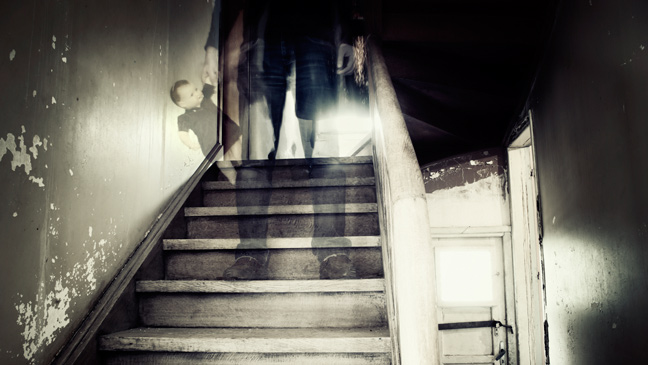
8 spooky signs that your home might be haunted

Find yourself wondering whether you live in a haunted house? Here are the common signs – and what to do about them.
Not everyone believes in ghosts, spirits and the paranormal. But are there strange goings-on in your home that you sometimes can’t explain? One possible conclusion could be that it’s haunted…
Alison Wynne-Ryder, a psychic medium, believes there’s a few easy ways to tell if your house is home to spirits. And before you think that it’s only old buildings that can be haunted, think again.
We take a look at how you can tell if your home is haunted...who you gonna call?

What type of buildings can be haunted?

“Although most people you ask would say old properties – or buildings that house many people, such as prisons, hospitals and castles – the reality is that any property can be haunted, even a modern one,” says Alison.
“However, the likelihood is that more old properties tend to have a ‘haunted feeling’ about them, as they have more history and habitation than newer buildings.”

What feelings would I have in a ‘haunted’ property?

  • Feelings of being watched or spied on.
  • Feelings of someone standing close behind you.
  • Feelings of being touched by unseen hands.
  • Feelings of the hair on back of your neck standing up.
  • Feelings of cobwebs on your face or body.
  • Feeling a cold breeze as if someone has walked past you.
  • Dark depressing feeling, especially in one particular location.

What are the signs that a building is haunted?

  • Lights turning on and off, or up and down, on their own.
  • Light bulbs blowing frequently.
  • Sounds of items being dropped – but when you go to investigate, there is nothing there.
  • Seeing unexplained shadows from the corner of your eye.
  • Strange behaviour from pets in the property: e.g. dogs barking or growling at something you cannot see, cats staring in a particular area as if they can see someone.
  • Hearing voices of people, whispers, or someone calling your name.
  • Seeing twinkling lights, mists or unexplained moving shapes.
  • Sudden temperature drops, especially in one area of the property.

How do spirits enter a house?

“They can 'reside' anywhere, but there are some traditional beliefs that the spirit enters and leaves through the chimney,” says Alison. “I know through experience that if they want to enter a house, they will enter wherever they wish to – and don't always exit the same way.
“They don't necessarily confine themselves to one area, although if they feel comfortable in a particular area, this will be where most of the activity is felt – such as extremely cold spots, feelings of being touched and so on. 
“For example, there was a spirit boy in my own house a couple of years ago and the sounds he was making seemed to come from within the walls. However, the deep cold I felt was in the spare bedroom, where my grandchildren stayed when they visited. He was drawn to them, making their toys go off on their own, playing with them. During this time, he hid in the wardrobe until I drew him close, communicated with him, and with the help of my medium friend, sent him to the light.”

What should I do if I think my home is haunted?

Alison suggests keeping a diary of events to see if there’s a pattern occurring of unexplained activity.
She also advises to think about when the strange goings-on started, and if something had happened around that time that could be attributed to the activity.
“For example, did someone 'play' with a oujia board, did you stay in a haunted house or castle, or visit an old graveyard?”
“If your home is indeed haunted, this will not go away of its own accord - it will get worse,” says Alison. She advises calling a reputable medium with ‘spirit rescue experience’ to see what they feel or sense, and give you advice.
“If there is a spirit stuck in the home, they will attend with another medium (or two, in case one of them is overshadowed by the spirit) and communicate with the spirit, hopefully sending it to the light.”

Monday, December 24, 2018

The Christmas Truce

The Christmas Truce
Just after midnight on Christmas morning, the majority of German troops engaged in World War I cease firing their guns and artillery and commence to sing Christmas carols. At certain points along the eastern and western fronts, the soldiers of Russia, France, and Britain even heard brass bands joining the Germans in their joyous singing.

At the first light of dawn, many of the German soldiers emerged from their trenches and approached the Allied lines across no-man’s-land, calling out “Merry Christmas” in their enemies’ native tongues. At first, the Allied soldiers feared it was a trick, but seeing the Germans unarmed they climbed out of their trenches and shook hands with the enemy soldiers. The men exchanged presents of cigarettes and plum puddings and sang carols and songs. There was even a documented case of soldiers from opposing sides playing a good-natured game of soccer.

The so-called Christmas Truce of 1914 came only five months after the outbreak of war in Europe and was one of the last examples of the outdated notion of chivalry between enemies in warfare. In 1915, the bloody conflict of World War I erupted in all its technological fury, and the concept of another Christmas Truce became unthinkable

Saturday, December 22, 2018

Astronomers across the world are preparing for December’s Cold Moon on Saturday, the last full moon of 2018.

The exact time when the moon comes opposite the sun is 17.48, though witnesses will be able to see the full moon at any point overnight.

“It will be visible throughout the night, for anyone who has clear skies – the actual moment of the full moon, the point where the moon comes exactly opposite the sun in the sky will be at 17.48, so just coming up to six o’clock, but there will be no appreciable difference in how the moon appears,”

“As it stands, it’s looking rather cloudy, not completely overcast here in the South so there might be quite a lot of cloud, but if the cloud is thin cloud, then the moon is very dramatic anyway, being so bright in the sky thin cloud normally isn’t enough to stop the moon light coming through – and if you have a telescope or something like that you can usually see the details on the surface of the moon, even through a small amount of thin cloud.”


The astronomer warned that the moon may appear bigger but said this is just an illusion.

You will notice as well that when the moon is rising and setting when it’s a full moon in particular it has a tendency to look very large and this is an illusion created by our brains when things are close to the horizon.

“But also something that is not an illusion is that the rising and setting can take on quite a warm colour, sort of a yellow, orange tone and this is because moon light, which is sunlight bouncing off the moon, is being filtered through our atmosphere, so in the same way that sunsets look red, moon sets and moon rises also have a slightly reddish colour to them.”

Though there aren’t any noticeable differences in a full moon, the event does take place during the Ursids meteor shower, which could provide some extra special lunar photography.

The event is particularly notable this year as it occurs around the 50th anniversary of Apollo 8, the first time humans could see the whole of the planet at once.

Thursday, December 20, 2018

First export of American furs

First export of American furs


Under the care of Robert Cushman, the first American furs to be exported from the continent leave for England aboard the Fortune.

One month before, Cushman and the Fortune had arrived at Plymouth Colony in present-day Massachusetts with 35 settlers, the first new colonists since the settlement was founded in 1620. During Cushman’s return to England, the Fortune was captured by the French, and its valuable cargo of furs was taken. Cushman was detained on the Ile d’Dieu before being returned to England.


Within a few years of their first fur export, the Plymouth colonists, unable to make their living through cod fishing as they had originally planned, began concentrating almost entirely on the fur trade. The colonists developed an economic system in which their chief crop, Indian corn, was traded with Native Americans to the north for highly valued beaver skins, which were in turn profitably sold in England to pay the Plymouth Colony’s debts and buy necessary supplies.


Drake sets out

English seaman Francis Drake sets out from Plymouth, England, with five ships and 164 men on a mission to raid Spanish holdings on the Pacific coast of the New World and explore the Pacific Ocean. Three years later, Drake’s return to Plymouth marked the first circumnavigation of the earth by a British explorer.

After crossing the Atlantic, Drake abandoned two of his ships in South America and then sailed into the Straits of Magellan with the remaining three. A series of devastating storms besieged his expedition in the treacherous straits, wrecking one ship and forcing another to return to England. Only The Golden Hind reached the Pacific Ocean, but Drake continued undaunted up the western coast of South America, raiding Spanish settlements and capturing a rich Spanish treasure ship.

Drake then continued up the western coast of North America, searching for a possible northeast passage back to the Atlantic. Reaching as far north as present-day Washington before turning back, Drake paused near San Francisco Bay in June 1579 to repair his ship and prepare for a journey across the Pacific. Calling the land “Nova Albion,” Drake claimed the territory for Queen Elizabeth I.

In July, the expedition set off across the Pacific, visiting several islands before rounding Africa’s Cape of Good Hope and returning to the Atlantic Ocean. On September 26, 1580, The Golden Hind returned to Plymouth, England, bearing treasure, spice, and valuable information about the world’s great oceans. Drake was the first captain to sail his own ship all the way around the world–the Portuguese explorer Ferdinand Magellan had sailed three-fourths of the way around the globe earlier in the century but had been killed in the Philippines, leaving the Basque navigator Juan Sebastián de Elcano to complete the journey.

In 1581, Queen Elizabeth I knighted Drake, the son of a tenant farmer, during a visit to his ship. The most renowned of the Elizabethan seamen, Sir Francis Drake later played a crucial role in the defeat of the Spanish Armada.

Saturday, November 24, 2018

Origin of Species is published

On the Origin of Species by Means of Natural Selection, a groundbreaking scientific work by British naturalist Charles Darwin, is published in England. Darwin’s theory argued that organisms gradually evolve through a process he called “natural selection.” In natural selection, organisms with genetic variations that suit their environment tend to propagate more descendants than organisms of the same species that lack the variation, thus influencing the overall genetic makeup of the species.

Darwin, who was influenced by the work of French naturalist Jean-Baptiste de Lamarck and the English economist Thomas Mathus, acquired most of the evidence for his theory during a five-year surveying expedition aboard the HMS Beagle in the 1830s. Visiting such diverse places as the Galapagos Islands and New Zealand, Darwin acquired an intimate knowledge of the flora, fauna, and geology of many lands. This information, along with his studies in variation and interbreeding after returning to England, proved invaluable in the development of his theory of organic evolution.


The idea of organic evolution was not new. It had been suggested earlier by, among others, Darwin’s grandfather Erasmus Darwin, a distinguished English scientist, and Lamarck, who in the early 19th century drew the first evolutionary diagram—a ladder leading from one-celled organisms to man. However, it was not until Darwin that science presented a practical explanation for the phenomenon of evolution.

Darwin had formulated his theory of natural selection by 1844, but he was wary to reveal his thesis to the public because it so obviously contradicted the biblical account of creation. In 1858, with Darwin still remaining silent about his findings, the British naturalist Alfred Russel Wallace independently published a paper that essentially summarized his theory. Darwin and Wallace gave a joint lecture on evolution before the Linnean Society of London in July 1858, and Darwin prepared On the Origin of Species by Means of Natural Selection for publication.


Published on November 24, 1859, Origin of Species sold out immediately. Most scientists quickly embraced the theory that solved so many puzzles of biological science, but orthodox Christians condemned the work as heresy. Controversy over Darwin’s ideas deepened with the publication of The Descent of Man, and Selection in Relation to Sex (1871), in which he presented evidence of man’s evolution from apes.

By the time of Darwin’s death in 1882, his theory of evolution was generally accepted. In honor of his scientific work, he was buried in Westminster Abbey beside kings, queens, and other illustrious figures from British history. Subsequent developments in genetics and molecular biology led to modifications in accepted evolutionary theory, but Darwin’s ideas remain central to the field.


This Day In History Doctor Who is first broadcast on BBC TV

November 23, 1963: Doctor Who is first broadcast on BBC TV
The family science fiction show that would become a global phenomenon was first broadcast to a Britain shocked by the death of US President Kennedy a day earlier.

On November 23, 1963, the first episode of a family science fiction show which would go on to become a global television phenomenon was broadcast.

Doctor Who, the story of an alien traveller in space and time who finds adventure with his granddaughter and companions, had had a fraught beginning, its pilot episode re-shot after performance and technical errors.


Its eventual launch on Saturday 23 November was somewhat overshadowed by the news from America of the assassination of President John F Kennedy the previous day.

Viewing figures for the opening episode, An Unearthly Child, featuring William Hartnell as the Doctor, Carole Ann Ford as his granddaughter Susan, and Jacqueline Hill and William Russell as her teachers Barbara and Ian, suffered accordingly.

Source:https://youtu.be/OxqBjoITduU Series producer Verity Lambert persuaded BBC bosses to re-screen the first episode before the second was shown on the following Saturday. This enabled Doctor Who’s audience to build and led to an average of six million watching the first four-part serial.

The programme’s following instalment, entitled The Daleks, would consolidate its success with the first appearance of the Doctor’s arch enemies, and launch the BBC’s first ever merchandising boom.


Đặt lọ lộc bình chuẩn phong thủy đem đến tài vận cho gia chủ

Nguồn gốc Từ rất lâu thú chơi lọ lộc bình đã được hình thành trong các gia đình hoặc dòng họ có thế lực, điều đó được lưu giữ cho đến ngày nay người Việt vẫn ưu chuộng mẫu lục bình bởi sự sang trọng cũng như ý nghĩa phong thủy. Lọ lộc bình thường đi theo cặp vì thế sẽ đem lại sự cân đối hài hòa trong căn phòng. Vì thế từ lâu ông cha ta đã nghiên cứu cách đặt lọ lộc bình và đưa ra một số nguyên tắc nhất định.


Ý nghĩa phong thủy Lọ lộc bình là tượng trưng cho tiền tài phú quý, tấn tài tấn lộc cho gia chủ. Ngoài ra còn một ý nghĩa là ít người biết đến là cặp lộc bình cất giữ của cải tích tài sản cho gia đình. Nếu trên lọ còn đường đắp nổi các hình phượng hoàng rồng sẽ làm cho căn nhà thêm năng lượng, huyền ảo, lưu thông. Thường lộc bình sẽ có thân to tùy loại sẽ có đường kính khác nhau. Phần cổ sẽ hẹp lại nhưng lại loe rộng ở miệng, điều này biểu trưng cho việc hút tài hút lộc vào rồi giữ ở bên trong. Về kích thước có thể cao từ 1m 2m tùy loại thấp thì có thể kê thêm cái đôn ở dưới. Do chức năng giữ tài lộc nên không thể đặt ở nơi thoáng đãng mà thường đặt phòng khách theo cặp và kín đáo.

Chọn loại lộc bình để đặt trong nhà: Lộc bình hiện nay trên thị trường có nhiều chất liệu khác nhau nhưng để vừa đẹp vừa phong thủy bạn nên chọn loại chất liệu bằng gốm và sản xuất từ bát tràng. Tìm hiểu thật kĩ trước khi mua các loại lộc bình giá rẻ từ trung quốc vì vừa không thể hiện được ý nghĩa mà chất lượng bị hao mòn sau thời gian sử dụng dài gây lãng phí. Men các loại lộc bình bát tràng rất cao cấp có thể sử dụng trong hàng chục năm mà không lo bị phai hay biến dạng, lau chùi cũng dễ chỉ cần khăn khô bám bụi có thể lau dễ dàng hằng ngày. Vì là đi theo cặp nên bạn chọn không gian hơi lớn 1 chút để đặt không sẽ bị vướng đi lại, thường sẽ ở cạnh bàn hoặc ở góc tường. Một số kiểu dáng bạn có thể tham khảo ở hình.

Nguồn: http://battrang24h.com